



In short
Every winter, hundreds of humpback whales come to mate and give birth in Samaná Bay. The official whale watching season runs from January 15 to March 30, peaking in February. Trips leave from the port of Samaná on authorized boats that follow strict rules: limited observation time and no swimming with the whales. Holaqueya runs the trip from Las Terrenas, 8 am to 12 pm, with Nicolas, our guide.
It’s one of the most beautiful natural spectacles in the Caribbean and, for me, the most anticipated moment of the year. Every winter, humpback whales leave the cold waters of the North Atlantic for Samaná Bay, in the north-east of the Dominican Republic. They come to mate and give birth to their calves. Here’s everything you need to know to enjoy this moment in the best conditions, while respecting the animals.
When to see whales in Samaná?
The official whale watching season runs from January 15 to March 30. The first whales arrive at the end of the year, but they are most numerous in February: that’s the peak of the season. In early January and late March, sightings are still possible but less frequent.
If you’re planning your trip around the whales, aim for late January to early March. For the rest of your stay, read our guide best time to visit the Dominican Republic.
Why do whales come to Samaná?
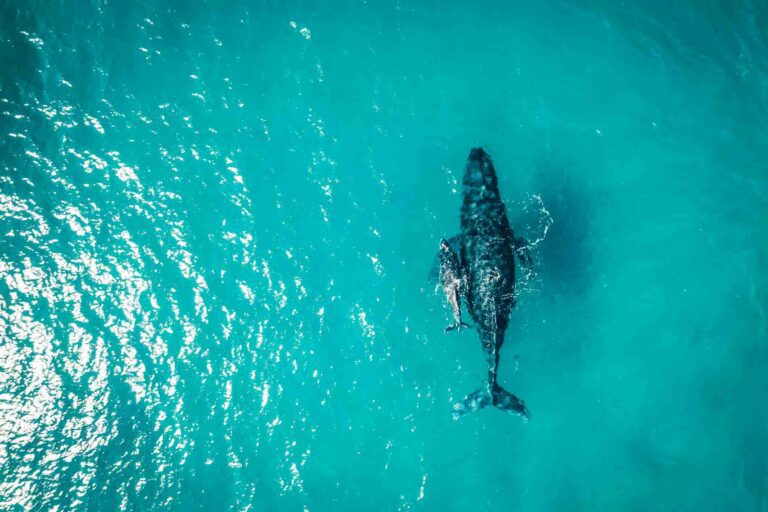
North Atlantic humpback whales spend the summer feeding in cold waters, then migrate to the warm, calm waters of the Caribbean to breed. Samaná Bay and the Silver Bank, off the north coast, are among their most important breeding grounds. The Silver Bank was in fact the first humpback whale sanctuary in the Caribbean region.
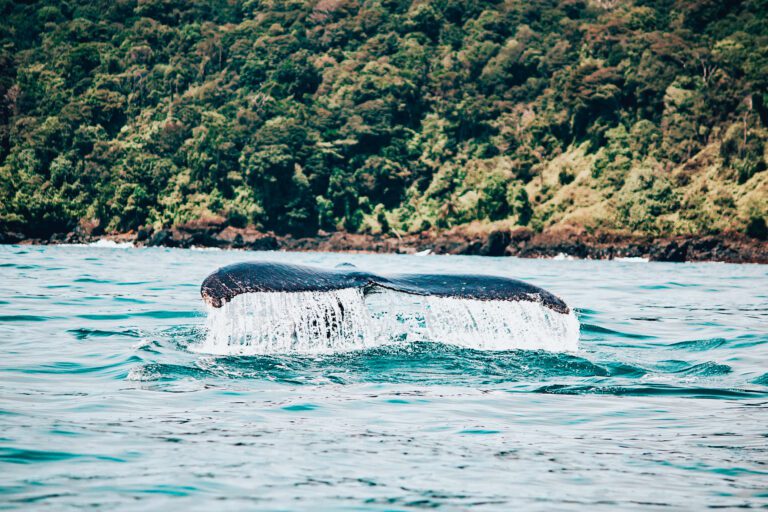
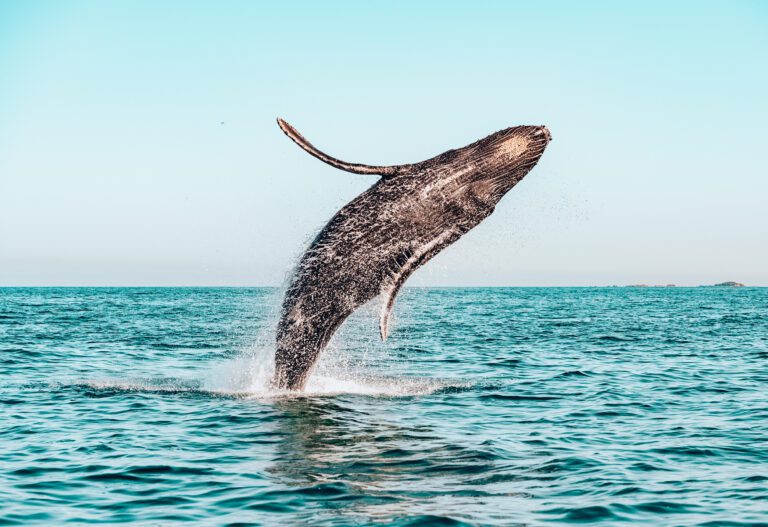
In the bay, you’ll witness unforgettable scenes: males competing for a female, spectacular breaches, fin and tail slaps on the surface, and mothers watching over their calves.
What is a whale watching trip like?
Boats leave from the port of Santa Bárbara de Samaná. With Holaqueya, we pick you up in Las Terrenas and the trip takes a morning, from 8 am to 12 pm. The sea is usually calmer in the morning.
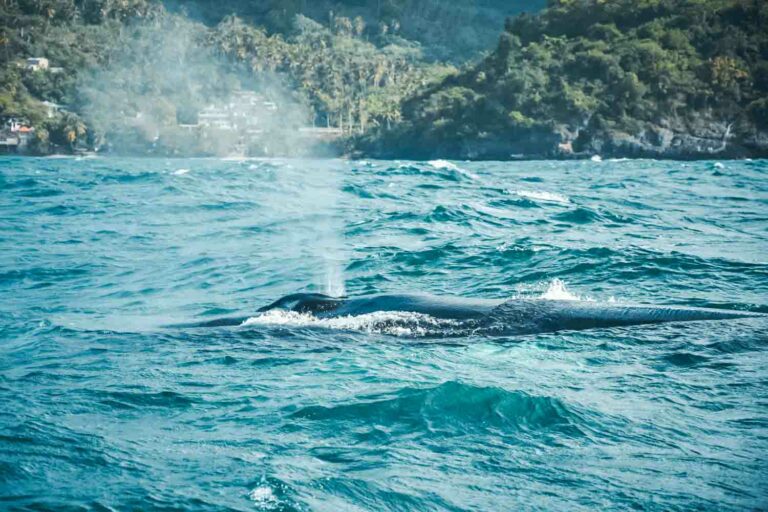
Once in the bay, the captain and guide spot the whales’ blows and movements. The boat approaches to the regulation distance, then you watch, listen to the guide explain the animals’ behavior, and enjoy. Discover our whale watching trip in Samaná.
Why we don’t offer Cayo Levantado
Many whale watching trips sold by mass tourism companies end with a stop at Cayo Levantado, an islet in Samaná Bay. We chose not to offer this excursion: the islet is overrun by large groups and there are simply too many people. We prefer a trip focused on the whales, and then letting you enjoy the far more unspoiled beaches of the peninsula, like Playa Cosón or Punta Bonita in Las Terrenas.
A word from Célia
“Every year, whale season remains my favorite memory. I love going with my family: seeing these giants burst out of the water, blow, then disappear beneath the surface is a thrill that never fades. To live this moment, we always go out with Nicolas, our guide. To me, he is simply the best guide on the peninsula.”
Célia Tichadelle, founder of Holaqueya
Responsible whale watching: the sanctuary rules
Samaná Bay is part of a marine mammal sanctuary regulated by the Dominican Ministry of Environment. Only authorized boats may take visitors, and they must follow precise rules:
- A minimum distance from the whales, greater for a mother and her calf.
- Limited observation time: 30 minutes maximum with a group of whales, 20 minutes with a mother and calf.
- No swimming with the whales in the bay.
- No unnecessary noise: engines idling, no horns.
That’s why we only work with operators who respect these rules. Respectful whale watching is also more beautiful: undisturbed whales stay longer near the boat and behave more naturally.
Our tips to enjoy the trip
- Seasickness: the bay can be choppy. If you’re prone to it, take medication before leaving and sit at the back of the boat.
- What to bring: sunscreen, sunglasses, a cap, a windbreaker and a bottle of water.
- Photos: a phone is enough for great memories; a zoom lens helps capture breaches. Also take time to simply watch.
- With kids: it’s one of families’ favorite activities. Tell them about whales before the trip: they’ll spot them even faster than you.
Where to stay to see the whales?
Las Terrenas is the ideal base: the trip is in the morning and you enjoy the beach in the afternoon. Find our addresses and itinerary in our Samaná Peninsula guide and our article things to do in Las Terrenas. Still unsure about the region? Read our comparison Samaná or Punta Cana.
Frequently asked questions
When can you see whales in Samaná?
The official whale watching season runs from January 15 to March 30. It usually peaks in February, when the most whales are in the bay.
Are you sure to see whales?
During the season, sightings are very frequent: hundreds of humpback whales visit Samaná Bay every winter. However, they are wild animals and no trip can guarantee a sighting 100%.
Can you swim with whales in Samaná?
No, swimming with whales is prohibited in Samaná Bay. Whale watching is done only from authorized boats, following the distances and observation times set by the Ministry of Environment.
Where do whale watching trips leave from?
Boats leave from the port of Santa Bárbara de Samaná. Holaqueya runs the trip from Las Terrenas, transfer included, in a morning from 8 am to 12 pm.
Is whale watching suitable for children?
Yes, it’s one of families’ favorite activities. Bring seasickness medication if your child is prone to it, sunscreen and a windbreaker.
Sources: Dominican Ministry of Environment and Natural Resources, humpback whale watching season rules.